Table of Contents
- Introduction
- Types of Lifting and Rigging Equipment
- Advancements in Lifting Technology
- Safety Considerations
- Conclusion
Introduction
In today’s fast-paced construction industry, the use of lifting and rigging equipment is crucial in achieving both efficiency and safety on the job site. These high-performance tools and systems allow crews to move substantial loads, such as steel beams, concrete panels, and heavy machinery, with accuracy and control. The evolution of this equipment has enabled contractors to tackle larger, more complex builds while minimizing project delays.
Proper use of lifting and rigging solutions enhances construction efficiency and reduces workplace accidents. As projects become larger and more complex, high-quality equipment and safety practices are essential for meeting deadlines and protecting personnel. Understanding equipment types, technological advances, and safety protocols allows construction teams to improve productivity and prevent injuries, making knowledge of these areas crucial for project success.
Types of Lifting and Rigging Equipment
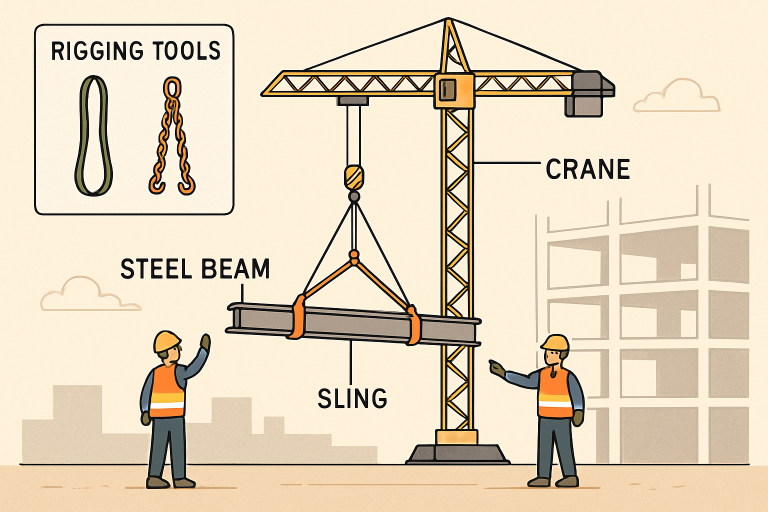
- Cranes: Cranes are a mainstay on construction sites—often towering above city skylines. Tower cranes offer the height and lifting capacity needed for constructing multi-story buildings, while mobile cranes provide flexibility, allowing easy relocation and handling various lifting tasks. Both types streamline the transportation and positioning of heavy building elements.
- Hoists: Hoists are specifically designed for vertical lifting and are ideal for moving materials between floors or for assisting in the erection of steel frameworks. Depending on the load and requirements, electric, manual, or pneumatic hoists can be deployed for precise, safe lifts.
- Slings and Chains: Securing heavy loads during transit is vital. Slings, chains, and wire ropes—made from materials ranging from durable steel to lightweight high-strength synthetics—ensure loads are properly balanced and prevented from shifting. Selecting the right type of sling or chain ensures safe handling for a range of shapes and weights.
Advancements in Lifting Technology
The past decade has witnessed rapid innovation in the lifting and rigging sector. Modern construction sites are leveraging new tools to maximize efficiency while reducing risks:
- Smart Rigging Systems: The integration of IoT sensors into lifting gear enables real-time data on load stress, weight distribution, and equipment condition to be instantly accessible from a distance. These systems can signal operators to potential overloads or faults before a serious issue arises, helping prevent costly downtime.
- Automation and Robotics:Autonomous material handlers, robotic cranes, and programmable hoists tackle repetitive, hazardous, or precision tasks with unmatched accuracy. These solutions not only minimize crew members’ exposure to dangerous lifts but also significantly reduce human error.
These technological advancements are setting new standards for the industry, with increasing adoption across commercial and infrastructure sectors. As a result, construction companies can pursue more ambitious projects with greater confidence in equipment reliability and overall jobsite safety.
Safety Considerations
With heavy loads and powerful machinery, the potential for incidents is ever-present—making safety non-negotiable. Industry professionals must adhere to strict guidelines and standards to ensure everyone returns home safely at the end of the day:
- Regular Equipment Inspections: Daily and monthly inspections of lifting and rigging tools can identify frayed cables, structural weaknesses, or worn components before they lead to accidents. According to Construction21, recognizing damaged or unsafe rigging equipment is essential to maintaining workplace safety. Failure to conduct routine checks may result in catastrophic equipment failures.
- Operator Training: Operators should complete comprehensive certification programs tailored to their specific responsibilities. Ongoing training keeps staff up to date on the latest operating procedures and best safety practices, ensuring every lift is executed safely and efficiently.
- Compliance with Regulations:Adhering to established standards, such as those set by OSHA, ensures both legal compliance and physical safety. Proper recordkeeping, load planning, and equipment labeling form critical parts of a well-functioning safety program.
By combining regular inspections with strong training and compliance, organizations reduce the likelihood of incidents and create a safety-first culture across all levels of the workforce.
Conclusion
Lifting and rigging equipment stands at the forefront of modern construction practices, supporting the safe, efficient movement of materials that keep projects on track. Ongoing advances in smart technology and automation are revolutionizing how sites operate, while robust safety protocols ensure every lift occurs without incident. As the industry continues to advance, construction leaders who prioritize top-quality equipment, constant operator education, and a proactive approach to safety will maintain their competitive edge and consistently deliver successful projects.