Ethereum has established itself as a significant force in the digital currency space, recognized for its innovative smart contract functionality. This feature has made it a popular platform for developers and investors. As the market evolves, questions about its long-term reliability as an investment persist. A thorough examination of its fundamentals and market position is necessary to understand its potential.
Since its launch, the platform has experienced significant growth, hosting a vast number of decentralized applications (DApps) and financial projects. However, its journey has included challenges such as network congestion and high transaction fees, known as gas prices. These factors are important for evaluating its future trajectory.
Core Fundamentals and Ecosystem Growth
Ethereum’s value is deeply rooted in its extensive and active ecosystem. Its ability to support a wide range of applications has solidified its position in the market.
Leadership in Smart Contracts and dApps
Ethereum pioneered smart contracts, which are self-executing agreements with the terms of the agreement directly written into code. This has given it a first-mover advantage, helping it maintain a dominant market share. Its network is the foundation for a majority of decentralized finance (DeFi) activity, from lending and borrowing platforms to decentralized exchanges.
The platform’s role extends to non-fungible tokens (NFTs) and gaming, where it hosts some of the most prominent collections and applications. This widespread use has created a strong network effect, attracting a large and dedicated community of developers who continue to build and innovate on the platform.
A Foundation for Digital Assets and Finance
Ethereum serves as the primary blockchain for issuing and managing stablecoins, which are digital currencies pegged to stable assets like the U.S. dollar. The two largest stablecoins by market capitalization were created on its network. As the demand for stablecoins grows for uses like crypto trading settlements and cross-border payments, Ethereum’s role as their foundational layer becomes more critical.
Furthermore, the tokenization of real-world assets (RWA) is an expanding area where Ethereum holds a significant market share. Prominent financial institutions have used the network to tokenize assets such as money market and U.S. Treasury funds, signaling a belief in its capacity to revolutionize traditional finance.
Growing Institutional Interest
The approval and launch of Ethereum Exchange-Traded Funds (ETFs) marked a major milestone in its acceptance by traditional financial institutions. These regulated products provide an accessible way for institutional and retail investors to gain exposure to the asset. This growing institutional demand, which includes direct investment and development on the ecosystem, underscores confidence in Ethereum’s long-term promise.
Technological Evolution and Future Roadmap
Ethereum is not a static platform. A clear roadmap of upgrades aims to enhance its scalability, security, and user experience, directly addressing some of its historical limitations.
The Transition to Proof-of-Stake
A significant upgrade was the transition from a Proof-of-Work (PoW) consensus mechanism to a Proof-of-Stake (PoS) model. This change, known as ‘The Merge,’ dramatically reduced the network’s energy consumption. It also altered the asset’s economic model, with a portion of transaction fees being burned. This mechanism has the potential to make ETH a deflationary asset over time, adding a scarcity element.
Addressing Scalability
Scalability has been a persistent challenge, with high network activity often leading to congestion and increased costs. To address this, developers are working on further upgrades, such as sharding, which aims to split the blockchain to increase transaction throughput. Additionally, Layer 2 scaling solutions process transactions off-chain at higher speeds and lower costs, helping to relieve pressure on the main network.
Factors Influencing Market Performance
Several internal and external factors contribute to Ethereum’s market trends and price movements, creating both opportunities and risks for investors.
Market Volatility and Macroeconomic Factors
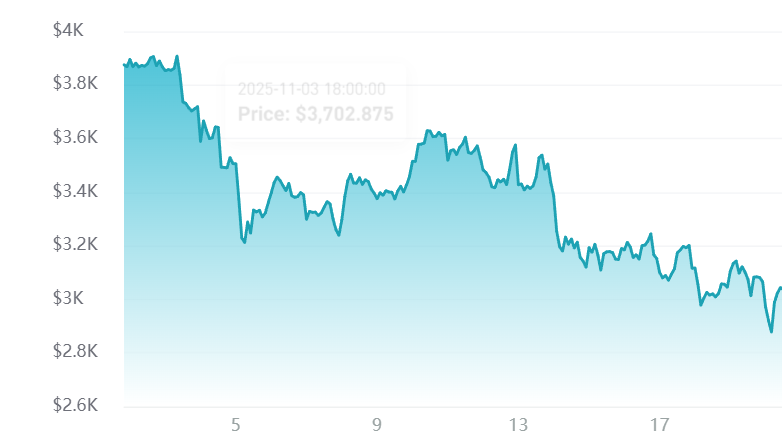
Like other digital currencies, Ethereum is known for its price volatility. Market fluctuations can be influenced by macroeconomic events, investor sentiment, and shifts in the broader financial landscape. The performance of digital assets is also tied to their market value, and tracking the live ethereum price usd is essential for investors monitoring these trends. Investors should be prepared for significant price swings.
The Competitive Landscape
Ethereum faces stiff competition from other blockchain platforms that aim to offer higher transaction speeds, lower fees, or specialized features. While Ethereum maintains a lead in total value locked (TVL), competitors have seen their market share grow. The ability of Ethereum to innovate and effectively scale will be crucial in maintaining its leadership position against these emerging alternatives.
The Regulatory Environment
The regulatory landscape for digital assets is in a constant state of evolution worldwide. Changes in government policies and regulations can have profound impacts on the market, affecting investor confidence and the operational capabilities of blockchain platforms. Staying informed about these regulatory shifts is essential for understanding the potential risks and opportunities associated with an investment in Ethereum.
A Balanced Outlook
Evaluating Ethereum as an investment requires a balanced perspective. The platform has demonstrated resilience and possesses unparalleled network effects, supported by a vast ecosystem of applications and a dedicated developer community. Its ongoing technological upgrades are designed to address its core challenges, particularly scalability.
However, investors must also consider the inherent volatility of the crypto market, the growing competition from other blockchains, and an uncertain regulatory future. Ultimately, the decision to invest depends on an individual’s financial goals, risk tolerance, and belief in the long-term vision of a decentralized digital economy.